
top of page

Matronize
Providing COVID Resources for Women All Over the World
Matronize
“Be safe, be smart, be kind” - Dr. Tedros Adhanom Ghebreyesus

Home: Welcome
Why is the topic of women in a post-COVID world so important?
The Biggest Issue
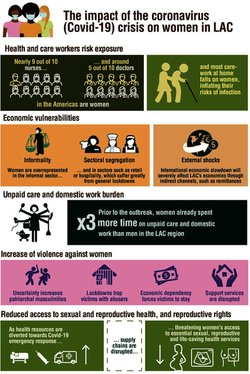
The effect of COVID-19 on Women is referred to as the "Shadow Pandemic." Why? Due to the general social separation experienced during the pandemic, many social issues and other things were overlooked and unheard of but nonetheless prevalent.
As you may know, cases of depression, anxiety, and other mental disorders drastically increased when COVID wreaked havoc on the world, but those weren't the only things. Women were facing dangers far worse than we could ever imagine.
You may think that COVID would bring families and relationships closer together, but just the opposite happened. Gender-based violence, specifically domestic violence, rapidly increased throughout the pandemic. Its heavy toll on women around the world was recognized as the "shadow pandemic" by the United Nations.
But why and how does a global pandemic have anything to do with violence and abuse? Due to situations like lockdown, job/income loss, and social isolation, more and more men were predisposed to violence and abuse. The rates of these actions increased because of these families and partners being behind closed doors.
Home: Text
Aside from domestic violence, women experienced many other issues due to the pandemic.
Poverty: COVID-19 meant staying home for citizens all over the world. Due to the extreme job loss, many parents were stuck at home with their families, partners, etc. Unfortunately, more women than men lost their jobs due to the pandemic. Even if she didn't lose her job, an extensive amount of women had to quit their jobs in order to be available at home for their spouses and families. This was even worse for single moms, as they were the breadwinners for their family. Loss of income/resignation of a job meant no money, which meant poverty for these women, children, and various types of families. In fact, by September 2021, women were 2.4 times more likely than men to report losing paid work in order to care for others, compared to 1.8 times more likely in March of 2020.
School closures: Here is how school closings affected women all over the world.
School closures increase child marriage risk by 25% per year, and, in countries where bride price is common, loss of household income increases the probability of marriage by 3%. As a result of the pandemic, UNICEF estimated that 10 million additional child marriages may occur before 2030. This increase is set to reverse 25 years of progress, which saw child marriage rates decline.
Women and girls were 11% more likely to drop out of school during the COVID-19 pandemic compared to men and boys.
The United Nations Population Fund found that approximately 12 million women in 115 low- and middle-income countries experienced disruptions in their access to contraceptive services, leading to 1.4 million unintended pregnancies in just the first year of the pandemic.
The pandemic has also caused significant delays in programs to end female genital mutilation (FGM) and child marriage, resulting in an estimated 2 million more cases of FGM over the next decade than would have otherwise occurred.
 |  |  |
|---|---|---|
 |  |  |
 |  |
Home: About
Did you know...?
Here are some facts regarding women and COVID that you may not have known!
McKinsey & Company reported that if nothing is done to address the negative impact of COVID-19 on women, global GDP will be $1 trillion below where it would have been had the pandemic affected men and women in their work equally in 2030. However, “if action is taken now to achieve best-in-region-gender-parity improvements by 2030…$13 trillion could be added to global GDP.”
In 2020, there was $800 billion in lost income for women around the world, according to Oxfam. Moreover, UN Women estimates that there will be 121 women in poverty for every 100 men by 2030.
Women are more likely to work in the informal economy, particularly domestic service – insecure positions which do not offer paid leave or the ability to work from home. In fact, women make up 80% of domestic workers, of which 72% of domestic workers have lost their jobs as a result of the pandemic.
In every region of the world, female-owned businesses experienced higher closure rates during the first year of the pandemic compared to male-owned businesses.
Home: List
Search

Home: Blog2

“This pandemic has magnified every existing inequality in our society – like systemic racism, gender inequality, and poverty.”
Melinda Gates
Home: Quote
bottom of page